Showing posts with label Short Stories. Show all posts

Monday, July 30, 2012

The little girl and the wolf

The story is about a lovely sweet girl who is loved by one and all. Everyone calls the girl Little Red Riding Hood as she always wears a riding hood made of red velvet, which was gifted to her by her grandmother.
One fine day, Little Red Riding Hood's mother packs a bottle of wine and a cake in a basket and asks her to take them to her sick grandmother. Before she leaves, her mother warns her not to talk to anyone on the way. Little Red Riding Hood promises her that she wouldn't and sets off to her grandmother's place, which was put up in the forest, half an hours walk from the village.
When Little Red Riding Hood enters the forest, she comes across a wolf, who plans to eat her up. So when the wolf asks her where she is off to, she answers him that she is on her way to see her grandmother, without suspecting the wolf. When the wolf asks her where her grandmother lives, Little Red Riding Hood innocently answers that too.
The wolf trots along with Little Red Riding Hood for sometime and tempts her to make a slow journey, asking her to enjoy the scenery. Little Red Riding Hood leaves the path and starts picking flowers and as she does so, she goes deeper and deeper into the forest. Meanwhile, the big bad wolf reaches grandmothers house and knocks the door. He enters the house and gobbles Little Red Riding Hood's grandmother. Then, he puts on the grandmothers clothes and night cap and lies down in her bed.
Little Red Riding Hood soon realizes that she is late and hurries to her grandmother's house. She reaches the house and finds the front door wide open. She makes her way towards the bed, to see her grandmother looking very strange.
"Grandmother, what big ears you have!" she asks.
"All the better to hear you with," the wolf replies.
"Grandmother, what big eyes you have!" she asks.
"All the better to see you with," the wolf replies.
"Grandmother, what big hands you have!" she asks.
"All the better to hold you with," the wolf replies.
"But grandmother, what big teeth you have!" she asks.
"All the better to eat you with," the wolf replies, and leaps out of the bed and swallows Little Red Riding Hood. After that, the wolf gets back to the bed and starts sleeping. After a while, a passing huntsman hears the loud snores and goes inside the house, to find a wolf sleeping on the bed. He immediately cuts open the wolf's stomach with a pair of scissors. Little Red Riding Hood pops out of the wolf's stomach, followed by her grandmother. They then fill the wolf's stomach with stones and sew it. The wolf wakes up and tries to run, but falls down dead instead.
The grandmother drinks the wine and eats the cake and feels much better and the story ends with Little Red Riding Hood promising her grandmother that she would never again leave the path when her mother has forbidden it.


Sunday, July 29, 2012

The Baron of Grogzwig


Grogzwig was a baron who lived in an old castle in Germany. Strange sounds and light effects within the castle were blamed on the ghost of a traveler who had been murdered by one of the baron’s ancestors.


Grogzwig lived a life of pleasure, happily hunting and drinking with his friends every day. However, in time he grew weary of his companions and yearned for excitement. He decides to marry a fellow baron’s daughter. The daughter offers no resistance.

No sooner is he married than his wife demands that he send away his friends. This is the first of many demands, and gradually the baron becomes a hen-pecked husband. They have twelve children. One of the daughters is sickly, which is a source of constant anxiety to her mother.

Grogzwig’s wealth diminishes, and he has no money left when his wife brings their thirteenth child into the world. He decides to commit suicide.

He is reflecting upon his life while smoking his pipe for the last time. Suddenly, a wrinkled creature appears before him, identifying himself as the Genius of Despair and Suicide. This creature uses a stake that is driven through its heart as a cane. He is in a hurry for the baron to off himself, for there are many people who want to commit suicide in these times—and so the creature’s schedule is rather busy. In fact, there is a man who wants to kill himself because he has too much money. The baron thinks this is stupid, and the creature says that it is no more stupid that killing yourself for having a lack of money.

The baron suddenly realizes that the creature is right. He decides he doesn’t want to kill himself. Though he doesn’t die a rich man years later, he dies happy
.

When the story concludes, the new coach has arrived.

Saturday, March 26, 2011

Oliver Twist -- Charles Dickens


Oliver Twist, published in 1838, is one of Charles Dickens' s best-known and well-loved works. It was written after he had already attained success as the author of The Pickwick Papers. It has been adapted as a film and a longrunning Broadway musical and has been considered a classic ever since it was first published.

An infant is born of a dying mother in a parish workhouse. Old Sally, attending the birth and death, takes from
the dying woman a locket and ring. Bumble, the beadle, names the boy Oliver Twist. Oliver asks for more - CruikshankOliver is sent to an infant
 farm, run by Mrs Mann, until he is 9 years old, at which time he is returned to the workhouse.

The orphans at the workhouse are starving due to callous mistreatment and cast lots to decide who among them will ask for more gruel on behalf of the group and Oliver is chosen. At supper that evening, after the normal allotment, Oliver advances to the master and asks for more.

Oliver is branded a troublemaker and is offered as an apprentice to anyone willing to take him. After narrowly escaping being bound to a chimney sweep, a very dangerous business where small boys are routinely smothered being lowered into chimneys, Oliver is apprenticed to the undertaker, Sowerberry.

Oliver fights with Noah Claypole, another of the undertaker's boys, after Noah mocks Oliver's dead mother. After being unjustly beaten for this offence, Oliver escapes the undertaker's and runs away to London.

Oliver meets Fagin's band of thievesOn the outskirts on the city Oliver, tired and hungry, meets Jack Dawkins who offers a place to stay in London. Thus Oliver is thrown together with the band of thieves run by the sinister Fagin. Oliver innocently goes "to work" with Dawkins, also known as the Artful Dodger, and Charlie Bates, another of Fagin's boys, and witnesses the real business when Dawkins picks the pocket of a gentleman. When the gentleman, Mr. Brownlow, discovers the robbery in progress Oliver is mistaken for the culprit and, after a chase, is captured and taken to the police. Oliver, injured in the chase, is cleared by a witness to the crime and is taken by the kindly Brownlow to his home to recuperate.

Oliver is kindly treated at the Brownlow home and, after a period of recuperation, is sent on an errand by Mr Brownlow to pay a local merchant 5 pounds and to return some books. On carrying out this charge Oliver is captured by Nancy and Bill Sikes and returned to Fagin's den of thieves.

Mr Brownlow, thinking that Oliver has run away with his money concludes that Oliver was a thief all along. This assumption is further strengthened when Bumble the beadle, answering an ad in the paper, placed by Brownlow, for information concerning Oliver, gives a disparaging opinion of Oliver.

The BurglaryOliver is forced by Fagin to accompany Sikes in an attempted robbery, needing a small boy to enter a window and open the door for the housebreakers. The robbery is foiled when the house is alarmed and, in the ensuing confusion, Oliver is shot.

Oliver is nursed back to health at the home of the Maylies, the house Sikes was attempting to burglarize. Oliver imparts his story to the Maylies and Doctor Losberne.

The mysterious Monks, revealed to be Oliver's half brother, teams up with Fagin in an attempt to recapture Oliver and lead him into a life of crime thereby negating the unknowing Oliver's claim to his rightful inheritance which would then go to Monks.

Sike's woman, Nancy, having compassion for Oliver, overhears Fagin and Monk's plan and tells Rose Maylie in the hope of thwarting the plan. Rose recruits Mr. Brownlow, Dr. Losberne, and others.

Mr Bumble woos Mrs Corney - CruikshankBumble the beadle has married the matron of the workhouse, Mrs. Corney. The former Mrs. Corney, attending the death of Old Sally, has taken the locket and ring that Sally had taken from Oliver's mother on her deathbed. Monks buys this locket and ring from the Bumbles hoping that in destroying it that Oliver's true identity will remain hidden.

Mr. Brownlow and Rose Maylie meet Nancy on London Bridge and she tells them where to find Monks. Fagin has had Nancy followed and, enraged, tells Sikes that Nancy has betrayed them. Sikes brutally murders Nancy and flees to the country.

Monks is taken by Mr. Brownlow. Fagin is captured and sentenced to be hung. Sikes, with a mob on his tail, accidentally hangs himself trying to escape. Fagin awaits executionThe Bumbles are relieved of their position at the workhouse, become paupers, and are now inmates at the same workhouse they once managed.

Oliver is revealed to be the illegitimate son of Edwin Leeford and Agnes Fleming. Leeford has fathered the evil Edward (Monks) through a failed former marriage. After seducing Agnes, Edwin dies, leaving a will which states that the unborn child will inherit his estate if "in his minority he should never have stained his name with any public act of dishonor, meanness, cowardice, or wrong" in the event of which all would go to Edward (Monks), hence Monk's attempt to corrupt Oliver via Fagin.

Monks is given half of Oliver's inheritance by Mr. Brownlow, who had been a friend of Edwin Leeford, in the hope that he will start a new life. Monks flees to America where he quickly squanders his portion and dies in prison. Rose Maylie is revealed to be the sister of Agnes Fleming who is adopted by the Maylies after her parents die, therefore Rose is Oliver's aunt.

Oliver collects his inheritance and is adopted by Mr. Brownlow. Rose marries longtime beau, Harry Maylie.

Friday, March 25, 2011

Ali Baba And 40 Thieves


Ali Baba  is a fictional character from medieval Arabic literature. He is described in the adventure tale of Ali Baba and the Forty Thieves
     Ali Baba and his elder brother Cassim are the sons of amerchant. After the death of their father, the greedy Cassim marries a wealthy woman and becomes well-to-do, building on their father's business—but Ali Baba marries a poor woman and settles into the trade of a woodcutter.
         One day Ali Baba is at work collecting and cutting firewood in the forest, and he happens to overhear a group of forty thievesvisiting their treasure store. The treasure is in a cave, the mouth of which is sealed by magic. It opens on the words  "Open Sesame" in English, and seals itself on the words  "Close Sesame". When the thieves are gone, Ali Baba enters the cave himself, and takes some of the treasure home.
    Ali Baba borrows his sister-in-law's scales to weigh this new wealth of gold coins. Unknowing to Ali, she puts a blob of wax in the scales to find out what Ali is using them for, as she is curious to know what kind of grain her impoverished brother-in-law needs to measure. To her shock, she finds a gold coin sticking to the scales and tells her husband, Ali Baba's rich and greedy brother, Cassim. Under pressure from his brother, Ali Baba is forced to reveal the secret of the cave. Cassim goes to the cave and enters with the magic words, but in his greed and excitement over the treasures forgets the magic words to get back out again. The thieves find him there, and kill him. When his brother does not come back, Ali Baba goes to the cave to look for him, and finds the body, quartered and with each piece displayed just inside the entrance of the cave to discourage any similar attempts in the future.
                 Ali Baba brings the body home, where he entrusts Morgiana, a clever slave-girl in Cassim's household, with the task of making others believe that Cassim has died a natural death. First, Morgiana purchases medicines from an apothecary, telling him that Cassim is gravely ill. Then, she finds an old tailor known as Baba Mustafa whom she pays, blindfolds, and leads to Cassim's house. There, overnight, the tailor stitches the pieces of Cassim's body back together, so that no one will be suspicious. Ali and his family are able to give Cassim a proper burial without anyone asking awkward questions.
                    The thieves, finding the body gone, realize that yet another person must know their secret, and set out to track him down. One of the thieves goes down to the town and comes across Baba Mustafa, who mentions that he has just sewn a dead man's body back together. Realizing that the dead man must have been the thieves' victim, the thief asks Baba Mustafa to lead the way to the house where the deed was performed. The tailor is blindfolded again, and in this state he is able to retrace his steps and find the house. The thief marks the door with a symbol. The plan is for the other thieves to come back that night and kill everyone in the house. However, the thief has been seen by Morgiana and she, loyal to her master, foils his plan by marking all the houses in the neighborhood with a similar marking. When the 40 thieves return that night, they cannot identify the correct house and the head thief kills the lesser thief. The next day, another thief revisits Baba Mustafa and tries again, only this time, a chunk is chipped out of the stone step at Ali Baba's front door. Again Morgiana foils the plan by making similar chips in all the other doorsteps. The second thief is killed for his stupidity as well. At last, the head thief goes and looks for himself. This time, he memorizes every detail he can of the exterior of Ali Baba's house.
                    The chief of the thieves pretends to be an oil merchant in need of Ali Baba's hospitality, bringing with him mules loaded with thirty-eight oil jars, one filled with oil, the other thirty-seven hiding the other remaining thieves. Once Ali Baba is asleep, the thieves plan to kill him. Again, Morgiana discovers and foils the plan, killing the thirty-seven thieves in their oil jars by pouring boiling oil on them. When their leader comes to rouse his men, he discovers that they are dead, and escapes.
To exact revenge, after some time the thief establishes himself as a merchant, befriends Ali Baba's son (who is now in charge of the late Cassim's business), and is invited to dinner at Ali Baba's house. The thief is recognized by Morgiana, who performs a dance with a dagger for the diners and plunges it into the heart of the thief when he is off his guard. Ali Baba is at first angry with Morgiana, but when he finds out the thief tried to kill him, he gives Morgiana her freedom and marries her to his son. Ali Baba is then left as the only one knowing the secret of the treasure in the cave and how to access it. Thus, the story ends happily for everyone except the forty thieves and Cassim.


Golden Goose -- Brothers Grim


The Golden Goose  is a fairy tale collected by the Brothers Grimm. The hero is the youngest of three brothers, given the nickname Dummling. His eldest brother is sent into the forest to chop wood, fortified with a rich cake and a bottle of wine. He meets a little gray man who begs a morsel to eat and a swallow of ale but is rebuffed. The eldest brother meets an accident and is taken home. The second brother meets a similar fate. Dummling, sent out with a biscuit cooked in the ashes of the hearth and soured beer, is generous with the little old man and is rewarded with a golden goose. The goose has been discovered within the roots of the tree chosen by the little gray man and felled by Dummling.
                  With the goose under his arm, Dummling heads for an inn, where, as soon as his back is turned, the innkeeper's daughter attempts to pluck just one of the feathers of pure gold, and is stuck fast. Her sister, coming to help her, is stuck fast too. And the youngest, determined not to be left out of the riches, is stuck to the second. Dummling makes his way to the castle, and each person who attempts to interfere is joined to the unwilling parade: the parson, his sexton, and two laborers.
In the castle lives the king with the Princess who has never laughed.But the despondent Princess, sitting by the window and glimpsing the parade staggering after Dummling and his golden goose, laughs until she cries. Some versions include an additional three trials. Dummling succeeds in all with the help of his little gray friend and finally wins the princess, living happily ever after.


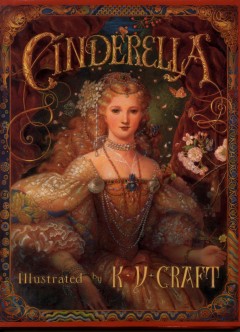
Cinderella -- Strabo

"Cinderella; or, The Little Glass Slipper" (French: Cendrillon, ou La petite Pantoufle de Verre) is a folk tale embodying a myth-element of unjust oppression/triumphant reward. Thousands of variants are known throughout the world. The title character is a young woman living in unfortunate circumstances that are suddenly changed to remarkable fortune. The word "cinderella" has, by analogy, come to mean one whose attributes are unrecognised, or one who unexpectedly achieves recognition or success after a period of obscurity and neglect. The still-popular story of "Cinderella" continues to influence popular culture internationally, lending plot elements, allusions, and tropes to a wide variety of media.

Once upon a time, there was a widower who married a proud and haughty woman as his second wife. She had two daughters, who were equally vain. By his first wife, he'd had a beautiful, young daughter, who was a girl of unparalleled goodness and sweet temper. The Stepmother and her daughters forced the first daughter to complete all the housework. When the girl had done her work, she sat in the cinders, which caused her to be called "Cinderella". The poor girl bore it patiently, but she dared not tell her father, who would have scolded her, since his wife controlled him entirely.
One day, the Prince invited all the young ladies in the land to a ball so he could choose a lovely wife. As the two Stepsisters were invited, they gleefully planned their wardrobes. Although Cinderella assisted them and dreamed of going to the dance, they taunted her by saying a maid could never attend a ball.
As the sisters swept away to the ball, Cinderella cried in despair. Her Fairy Godmother magically appeared and vowed to assist Cinderella in attending the ball. She turned a pumpkin into a coach, mice into horses, a rat into a coachman, and lizards into footmen. She then turned Cinderella's rags into a beautiful gown, complete with a delicate pair of glass slippers. The Godmother told her to enjoy the ball, but warned that she had to return before midnight; otherwise, the spells would be broken.
At the ball, the entire court was entranced by Cinderella, especially the Prince, who never left her side. Unrecognized by her sisters, Cinderella remembered to leave before midnight. Back home, Cinderella graciously thanked her Godmother. She then greeted the Stepsisters, who enthusiastically talked of nothing but the beautiful girl at the ball.
When another ball was held the next evening, Cinderella again attended with her Godmother's help. The Prince became even more entranced. However, this evening she lost track of time and left only at the final stroke of midnight, losing one of her glass slippers on the steps of the palace in her haste. The Prince chased her, but outside the palace, the guards had seen only a simple country wench leave. The Prince pocketed the slipper and vowed to find and marry the girl to whom it belonged. Meanwhile, Cinderella kept the other slipper, which had not disappeared when the spell had broken.
The Prince tried the slipper on all the women in the kingdom. When the Prince arrived at Cinderella's villa, the Stepsisters tried in vain to win over the prince. When Cinderella asked if she might try, the Stepsisters taunted her. Naturally, the slipper fitted perfectly, and Cinderella produced the other slipper for good measure. The Stepsisters begged for forgiveness, and Cinderella forgave them for their cruelties.
Cinderella returned to the palace, where she married the Prince, and the Stepsisters also married two lords.
The moral of the story is that beauty is a treasure, but graciousness is priceless. Without it, nothing is possible; with it, one can do anything.

Beauty and the Beast -- Gabrielle-Suzanne Barbot de Villeneuve

Beauty and the Beast (French: La Belle et la Bête) is a traditional fairy tale. The first published version of the fairy tale was a rendition by Gabrielle-Suzanne Barbot de Villeneuve, published in La jeune américaine, et les contes marins in 1740.The best-known written version was an abridgement of her work published in 1756 by Jeanne-Marie Le Prince de Beaumont, in Magasin des enfants, ou dialogues entre une sage gouvernante et plusieurs de ses élèves; an English translation appeared in 1757.
A wealthy merchant lived in a mansion with his three daughters, all of whom were very beautiful, but only the youngest, at fourteen, is named Belle (a French name equivalent to "Beauty") for being lovely and pure of heart; her sisters, in contrast, are wicked and selfish. The merchant eventually loses all of his wealth in a tempest at sea, and he and his daughters must therefore live in a small farmhouse and work for their living. After some years of this, the merchant hears that one of the trade ships he had sent off has arrived back in port, having escaped the destruction of its compatriots; therefore, he returns to the city to discover whether it contains anything of monetary value. Before leaving, he asks his daughters whether they desire that he bring them any gift upon his return. His two elder daughters ask for jewels and fine dresses, thinking that his wealth has returned; Belle is satisfied with the promise of a rose, as none grow in their part of the country. The merchant, to his dismay, finds that his ship's cargo has been seized to pay his debts, leaving him without money by which to buy his daughters their presents.
During his return, he becomes lost in a forest. Seeking shelter, he enters a dazzling palace. He finds inside tables laden with food and drink, which have apparently been left for him by the palace's unseen owner. The merchant accepts this gift and spends the night. The next morning as the merchant is about to leave, he sees a rose garden and recalls that Belle had desired a rose. Upon picking the most lovely rose he finds, the merchant is confronted by a hideous 'Beast', which tells him that for taking his (the Beast's) most precious possession after accepting his hospitality, the merchant must die. The merchant begs to be set free, arguing that he had only picked the rose as a gift for his youngest daughter. The Beast agrees to let him give the rose to Belle, only if the merchant will return, or his daughter goes to the castle in his place.
The merchant is upset, but accepts this condition. The Beast sends him on his way, with jewels and fine clothes for his daughters, and stresses that Belle must come to the castle of her own accord. The merchant, upon arriving home, tries to hide the secret from Belle; but she pries it from him and willingly goes to the Beast's castle. The Beast receives her graciously and informs her that she is mistress of the castle, and he is her servant. He gives her lavish clothing and food and carries on lengthy conversations with her. Each night, the Beast asks Belle to marry him, only to be refused each time. After each refusal, Belle dreams of a handsome prince who pleads with her to answer why she keeps refusing him, and she replies that she cannot marry the Beast because she loves him only as a friend. Belle does not make the connection between the handsome prince and the Beast and becomes convinced that the Beast is holding the prince captive somewhere in the castle. She searches for him and discovers multiple enchanted rooms, but, of course, never the prince from her dreams.
For several months, Belle lives a life of luxury at the Beast's palace, being waited on hand and foot by invisible servants, having no end of riches to amuse her and an endless supply of exquisite finery to wear. Yet, eventually, she becomes homesick and begs the Beast to allow her to go to see her family. He allows it, if she will return exactly a week later. Belle agrees to this and sets off for home with an enchanted mirror and ring. The mirror allows her to see what is going on back at the Beast's castle, and the ring allows her to return to the castle in an instant when turned three times around her finger. Her older sisters are surprised to find her well fed and dressed in finery. They grow jealous of her happy life at the castle, and, hearing that she must return to the Beast on a certain day, beg her to stay another day, even putting onion in their eyes to make it appear as though they are weeping. It is their wish that the Beast will grow angry with Belle for breaking her promise and will eat her alive. Belle's heart is moved by her sisters' false show of love, and she agrees to stay.
Belle begins to feel guilty about breaking her promise to the Beast and uses the mirror to see him back at the castle. She is horrified to discover that the Beast is lying half-dead of heartbreak near the rose bushes her father had stolen from and she immediately uses the ring to return to the Beast.
Upon returning, Belle finds the Beast almost dead, and she weeps over him, saying that she loves him. When her tears strike him, the Beast is transformed into a handsome prince. The Prince informs Belle that long ago a fairy turned him into a hideous beast after he refused to let her in from the rain, and that only by finding true love, despite his ugliness, could he break the curse. He and Belle are married and they lived happily ever after together.

Thursday, March 24, 2011

The 13 Clocks -- James Thurber


Once upon a time, in a gloomy castle on a lonely hill, where there were thirteen clocks that wouldn’t go, there lived a cold, aggressive Duke, and his niece, the Princess Saralinda.

                        She was warm in every wind and weather, but he was always cold. His hands were as cold as his smile, and almost as cold as his heart. He wore gloves when he was asleep, and he wore gloves when he was awake, which made it difficult for him to pick up pins or coins or the kernels of nuts, or to tear the wings from nightingales.

                        So begins James Thurber’s sublimely revamped fairy tale, The 13 Clocks, in which a wicked Duke who imagines he has killed time, and the Duke’s beautiful niece, for whom time seems to have run out, both meet their match, courtesy of an enterprising and very handsome prince in disguise. Readers young and old will take pleasure in this tale of love forestalled but ultimately fulfilled, admiring its upstanding hero (”He yearned to find in a far land the princess of his dreams, singing as he went, and possibly slaying a dragon here and there”) and unapologetic villain (”We all have flaws,” the Duke said. “Mine is being wicked”), while wondering at the enigmatic Golux, the mysterious stranger whose unpredictable interventions speed the story to its necessarily happy end.